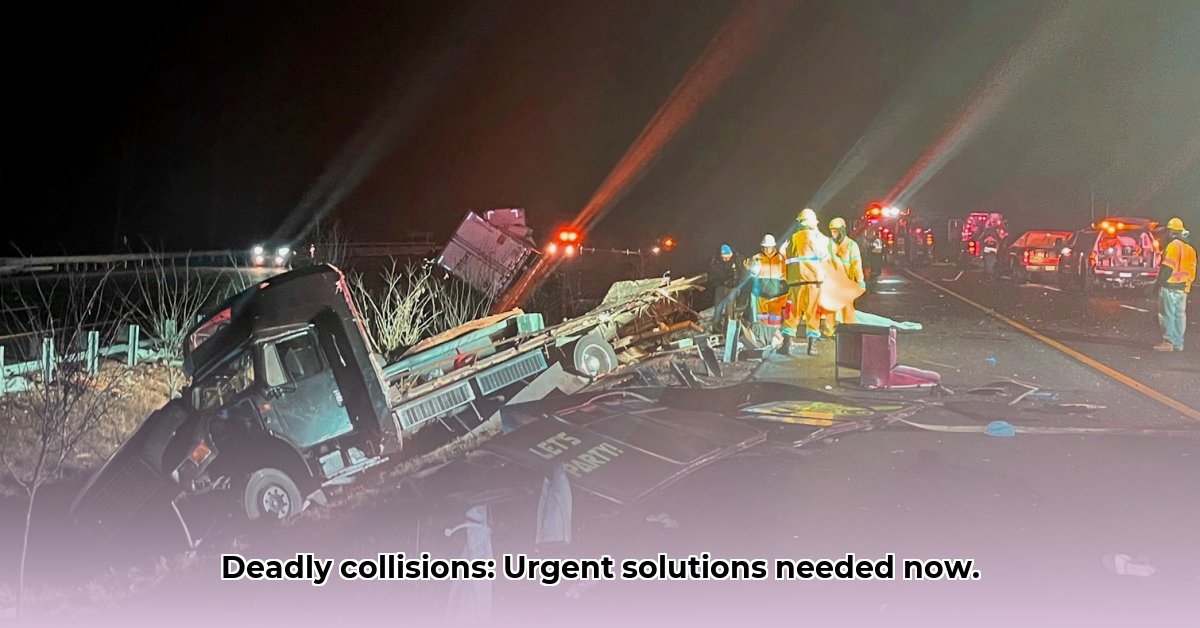
The jarring images of mangled metal and shattered lives remain seared into our collective memory after countless bus and tractor-trailer crashes. These aren't mere statistics; they represent real-life tragedies, leaving families devastated and communities reeling. Recent accidents, such as the Fremont incident highlighting the perils of backing large trucks in confined spaces, and the Illinois school bus crash resulting in multiple fatalities, underscore a critical need for immediate and sustained action. These seemingly disparate events share a common thread: systemic failures in safety protocols, both human and mechanical. This isn't simply about individual driver error; it's about acknowledging a deeper, more complex problem demanding comprehensive solutions. For more information on truck accidents, see this resource. The Fremont accident, though smaller in scale, dramatically illustrated the hidden dangers of reversing large trucks in constrained areas. A combination of poor communication, inadequate safety protocols, and potentially insufficient training contributed to the incident. The Illinois school bus tragedy, currently under investigation, likely involved a complex interplay of factors, including driver fatigue, potential mechanical malfunctions, and possible road design flaws. The loss of five lives serves as a brutal reminder of the urgency of this crisis.
Immediate Actions: A Rapid Response to Save Lives
We cannot afford to wait years for systemic change. Decisive action is needed now. Within the next year, the following must be implemented:
Enhanced Trucking Company Safety Protocols: Trucking companies must adopt and meticulously enforce stringent procedures for backing up trailers. This includes mandatory investment in advanced safety technology, such as backup cameras and sensors, and a complete overhaul of driver training to emphasize risk assessment and defensive driving techniques. Cutting corners is no longer an option; lives are at stake.
Strengthened Government Regulations and Road Improvements: Regulatory bodies like OSHA (Occupational Safety and Health Administration) and the DOT (Department of Transportation) must strengthen workplace safety regulations for the trucking industry. Urgent investment in road improvements, particularly in areas near schools and other high-risk zones, is crucial. Widespread public awareness campaigns must educate drivers, pedestrians, and cyclists about the inherent dangers.
Prioritized School Bus Safety Measures: School districts must prioritize bus safety by investing in regular and comprehensive driver training, upgrading bus fleets with cutting-edge safety features, and establishing robust protocols for all aspects of bus operations. The safety of our children is non-negotiable.
Accelerated Transportation Safety Board Investigations: Transportation safety boards must conduct swift and thorough investigations of every accident, openly sharing their findings to foster collaboration across jurisdictions and rapidly implement preventative measures. We must learn from each tragedy to prevent the next.
Long-Term Strategies: Building a Safer Future
While immediate action is paramount, long-term solutions are equally critical to address the root causes of these accidents and prevent future tragedies. Over the next three to five years, the following strategic initiatives are essential:
Industry-Wide Safety Standards Enforcement: Standardized, regularly audited safety protocols must become mandatory for all trucking companies. Independent audits and consistent enforcement are crucial to ensure the effectiveness of these standards.
Widespread Adoption of Advanced Driver-Assistance Systems (ADAS): Mandating ADAS in all heavy commercial vehicles is non-negotiable. This includes features such as automatic emergency braking, lane departure warnings, and forward collision warnings. Furthermore, we must actively research and invest in AI-powered driver monitoring systems to detect fatigue or impairment.
Elevated Driver Training and Licensing Standards: This involves stricter licensing requirements, continuous professional development, and regular refresher courses to keep safety procedures at the forefront of drivers' minds. Investment in enhanced training methods that emphasize risk assessment and real-world scenarios is crucial.
Targeted Road Infrastructure Upgrades: This encompasses targeted infrastructure improvements in high-risk areas, including enhanced signage, improved lighting, traffic-calming measures, and road designs that inherently reduce the likelihood of collisions between buses and larger vehicles.
Understanding the Risks: A Risk Assessment Matrix
The following matrix highlights key risk factors in bus and tractor-trailer accidents, their severity, and corresponding mitigation strategies:
| Risk Factor | Risk Level | Mitigation Strategy |
|---|---|---|
| Backing maneuvers | Very High | Improved training, mandatory spotters, advanced backup cameras & sensors, ADAS |
| Driver fatigue | Very High | Mandatory rest breaks, driver monitoring systems, improved scheduling, fatigue countermeasures |
| Poor road design | High | Road improvements, enhanced signage, better lighting, traffic calming measures, dedicated bus lanes |
| Mechanical failure | High | Regular, thorough maintenance, preventative inspections, improved maintenance protocols |
| Inadequate safety protocols | High | Standardized, audited procedures, rigorous employee training, clear and reliable communication |
| Driver training deficiencies | Very High | Comprehensive and recurring training, simulator use, enhanced testing & licensing standards, real-world scenario training |
The Regulatory Landscape: A Call for Stronger Laws
The recent accidents highlight critical gaps in existing regulations. We need not only stricter enforcement of current laws but also the creation of new legislation addressing the unique challenges of operating heavy vehicles. This includes updated safety standards for large vehicles, more rigorous driver training and licensing procedures, improved road infrastructure, and more robust accident investigation protocols focused on identifying root causes and implementing preventative measures—especially near schools and workplaces.
The devastating consequences of bus and tractor-trailer accidents are undeniable. However, the problem is not insurmountable. By implementing both immediate and long-term strategies, and by fostering collaboration across industries and government levels, we can create a significantly safer future on our roads. The cost of inaction—measured in lives lost and families devastated—is simply too high.
How to Improve School Bus Safety Near Trucking Routes
Protecting children near trucking routes demands a multifaceted approach. The size disparity between school buses and tractor-trailers creates significant safety challenges. Larger blind spots on trucks, combined with distracted driving, speeding, and poor visibility, exponentially increase the risk.
Enhancing Visibility and Infrastructure
Improving visibility is paramount. This includes using brightly colored buses, reflective markings on students, and clear signage. Flashing lights near intersections are also vital. Dedicated bus lanes, optimized traffic signals, and well-trained crossing guards enhance safety by creating a protective buffer around school buses.
Strengthening Driver Education and Enforcement
Specialized training for school bus drivers on navigating near trucks is essential. Regular refresher courses and stricter enforcement of traffic laws near schools, with increased fines for violations, are also vital.
Leveraging Technology for Enhanced Safety
Stop-arm cameras and GPS tracking on buses provide crucial data for enforcement and emergency response, adding another layer of protection. Driver awareness programs, combined with technological solutions, significantly bolster safety measures.
Community Engagement and Shared Responsibility
Effective school bus safety demands community-wide participation. Parents play a crucial role in teaching children safe bus-riding practices and reporting dangerous driving. Collective responsibility, involving schools, parents, drivers, law enforcement, and transportation providers, is essential for lasting improvement.
Key Takeaways:
- Improved visibility (enhanced lighting, signage, reflective materials) is crucial.
- Strategic bus stop placement away from high-traffic areas significantly reduces risk.
- Enhanced driver training for school bus drivers and strict enforcement of traffic laws are non-negotiable.
- Leveraging technology (stop-arm cameras, GPS tracking) provides enhanced safety measures.
- Community engagement and shared responsibility are fundamental to long-term success.